Replacing your home's drainage channels isn't exactly the kind of project that gets people excited. Nobody's posting about it on social media or inviting the neighbors over to admire new aluminum troughs. But here's the thing — choosing the right system can save you thousands of dollars, eliminate headaches for decades, and quietly boost your property value in ways that add up. If you're weighing your options, the one-piece continuous system (often called seamless) deserves a hard look. Let's break down exactly what sets it apart and why it consistently comes out on top for Texas homeowners.
Not All Channels Are Created Equal
Walk through any big-box hardware store and you'll find stacks of pre-cut sectional pieces — usually 10- or 20-foot lengths — designed to be pieced together with connectors, brackets, and a generous amount of sealant. It's a system that works, technically. But every single joint where two pieces meet is a potential weak point. Sealant degrades in UV light. Connectors expand and contract with temperature swings. Over a handful of Texas summers — where rooftop temperatures can exceed 150 degrees — those joints start to fail.
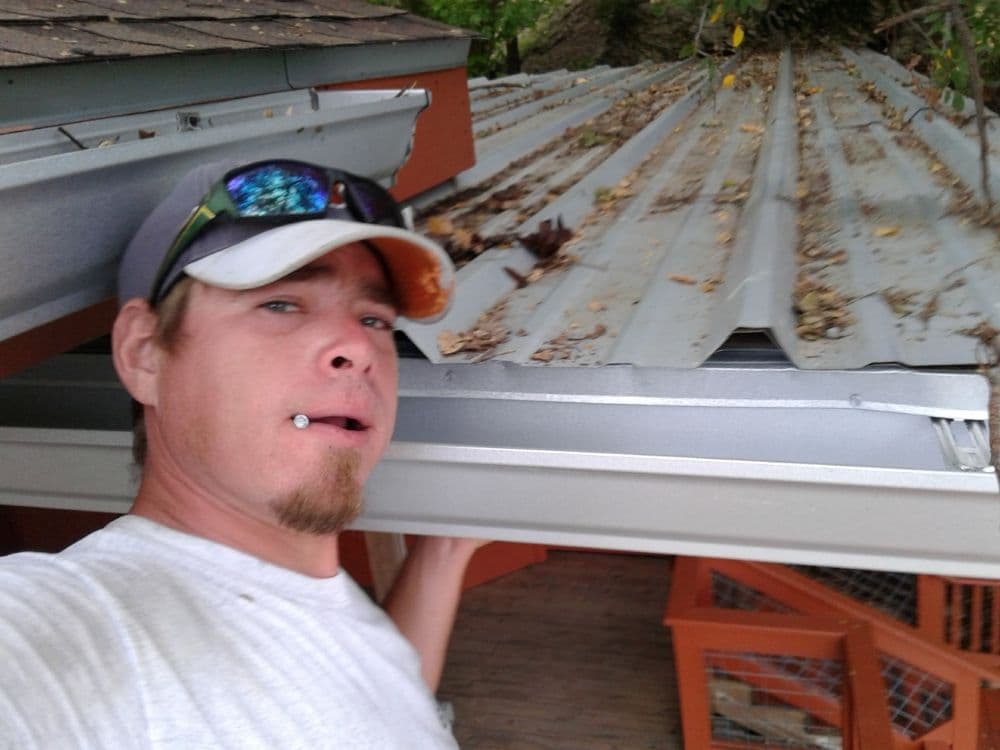
A continuous one-piece system takes a fundamentally different approach. A portable forming machine on-site feeds flat aluminum coil stock through a series of rollers, producing a single unbroken channel that matches the exact measurement of each roofline section. No mid-run joints. No connectors. No sealant except at the corners and downspout outlets. That translates to roughly 90 percent fewer potential leak points compared to a pieced-together setup.
Your Wallet Will Notice the Difference Over Time
Let's talk numbers, because this is where the conversation usually gets interesting. Yes, continuous systems carry a higher upfront price tag — typically 15 to 25 percent more than sectional alternatives for initial installation. That premium causes some homeowners to hesitate, and that's understandable. Nobody likes paying more than they have to.
But zoom out to a 20-year window and the math flips. Sectional setups need resealing every few years. Individual sections crack, warp, or pull apart and need replacing. Each service call costs money, and each failure risks water damage to fascia, soffits, or the foundation. Over two decades, the total cost of ownership for a sectional system — purchase price plus maintenance plus repairs — routinely exceeds what you'd spend on a continuous system that requires nothing more than periodic cleaning.
Think of it like buying a quality pair of boots versus the bargain bin option. The cheap pair needs replacing every year. The well-made pair lasts a decade. You know which one actually costs less.
Engineered to Handle What Texas Throws at You
If you've lived through even one Texas spring, you know what "heavy rain" really means. Storms that drop two or three inches in under an hour aren't unusual — they're practically routine from April through October. That volume of water needs to move through your drainage system fast, and anything that slows it down invites overflow.
The interior surface of a continuous channel is smooth from end to end. There are no ridges, lips, or connector edges disrupting the flow. Water moves faster and more efficiently toward the downspouts. During a torrential downpour, that smooth flow path can mean the difference between water reaching the ground safely and sheets of overflow cascading down your exterior walls.
The Texas sun is equally punishing. Sustained UV exposure breaks down sealants and causes thermal cycling that stresses joints in sectional systems. A continuous piece of aluminum with a baked-on enamel finish handles this beautifully — there's no sealant to degrade at mid-run joints because there are no mid-run joints.
The Color and Material Choices Might Surprise You
Gone are the days when white or brown were your only options. Modern aluminum coil stock comes with a factory-applied enamel finish in dozens of colors — everything from classic almond and clay to bold charcoal, black, copper, and forest green. That finish is baked on during manufacturing, so it resists fading, chalking, and peeling far better than any paint you could apply after the fact.
Matching your new system to your home's trim, shutters, or roof color creates a cohesive look that enhances curb appeal. Real estate agents consistently report that well-maintained, color-matched drainage adds to a home's perceived value during showings. It's one of those subtle details buyers notice even if they can't articulate why a house looks "put together."
Most residential applications use 5-inch K-style profiles, which handle standard roof areas with ease. Homes with steeper pitches, larger roof footprints, or areas where multiple roof planes converge may benefit from upgrading to a 6-inch profile. The wider channel handles significantly more volume, providing extra insurance during extreme weather events.
Aluminum gauges also vary. Standard .027-inch stock works well for most homes, while .032-inch heavy-duty stock offers additional rigidity for longer runs or areas prone to ladder contact during maintenance.
What the Installation Day Actually Looks Like
Curiosity about the process is natural, especially if you've never seen a forming machine in action. Here's how a typical installation day unfolds.
The crew arrives and takes precise measurements of every roofline section, verifying the numbers from the initial estimate. They set up the portable forming machine — it looks like a long, narrow trailer with a series of rollers inside — and feed flat coil stock through it. Out the other end comes a perfectly shaped channel, custom-cut to length. Watching raw metal transform into a finished product in seconds is genuinely satisfying.
Each section is carried to its position, and the crew mounts it using hidden hangers — brackets that screw into the fascia and clip inside the channel, invisible from ground level. Hanger spacing matters more than most people realize. Properly spaced hangers (typically every 18 to 24 inches) prevent sagging under the weight of water and debris, especially during heavy storms.
Pitch angle is set carefully. The channel needs a slight slope — usually about a quarter-inch drop for every ten feet of run — directing water toward the nearest downspout. Too little pitch and water pools. Too much and water races past the downspout opening. Experienced installers dial this in by eye and verify with a level.
End caps are sealed, corner miters are joined, and downspouts are connected and secured to the wall with straps. The entire system is then tested with a hose, checking every joint and confirming that water flows cleanly from one end to the other without pooling or leaking.
Longevity That Pays for Itself
With reasonable maintenance — essentially a cleaning once or twice per year — a quality aluminum continuous system will protect your home for 20 to 30 years. Some last even longer. Compare that to sectional setups that often need partial replacement within 8 to 12 years, and the durability advantage becomes stark.
The hidden hangers used in modern installations also outlast the spike-and-ferrule attachment method common in older sectional systems. Spikes loosen over time as wood expands and contracts, causing the channel to pull away from the fascia. Hidden hangers grip with screws and maintain a tight connection year after year.
Curb Appeal That Quietly Elevates Your Property
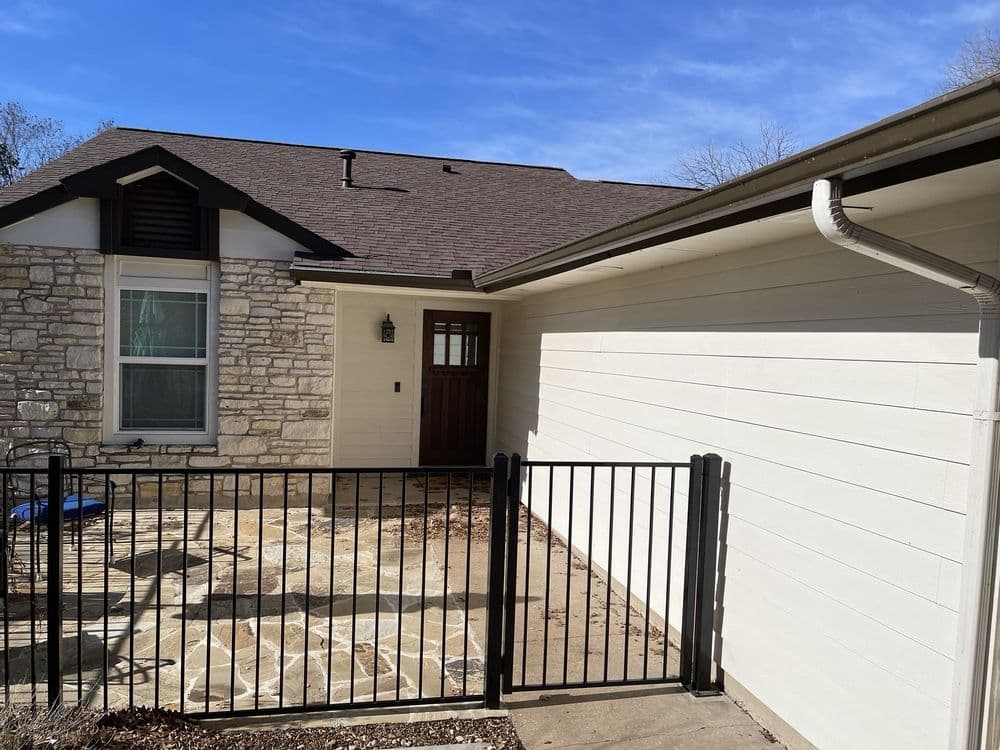
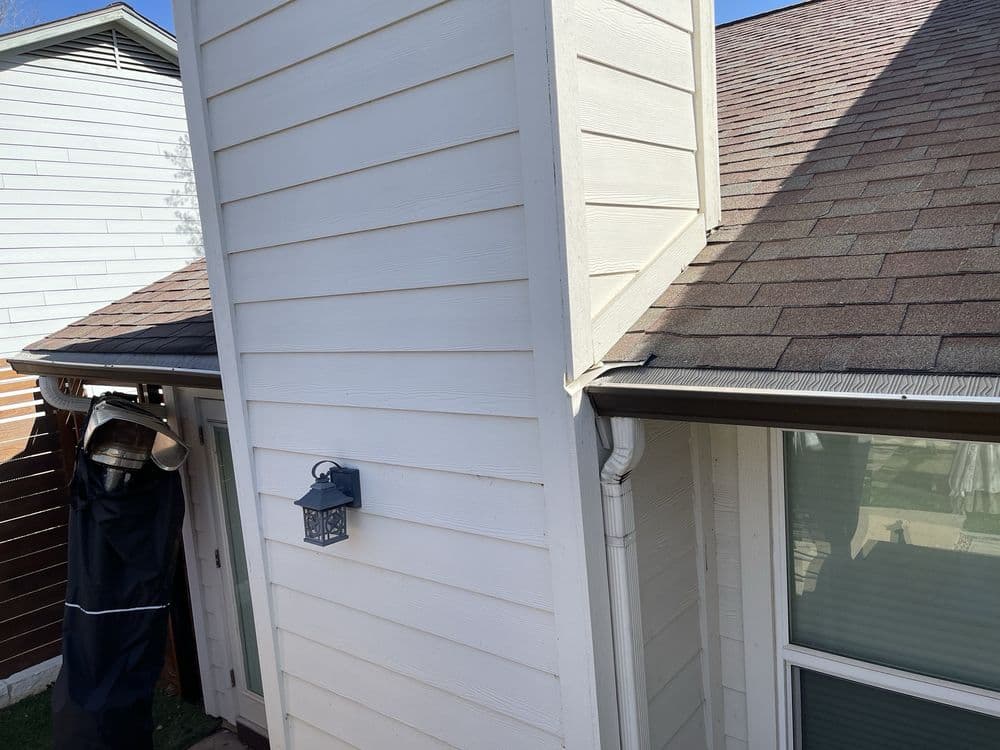
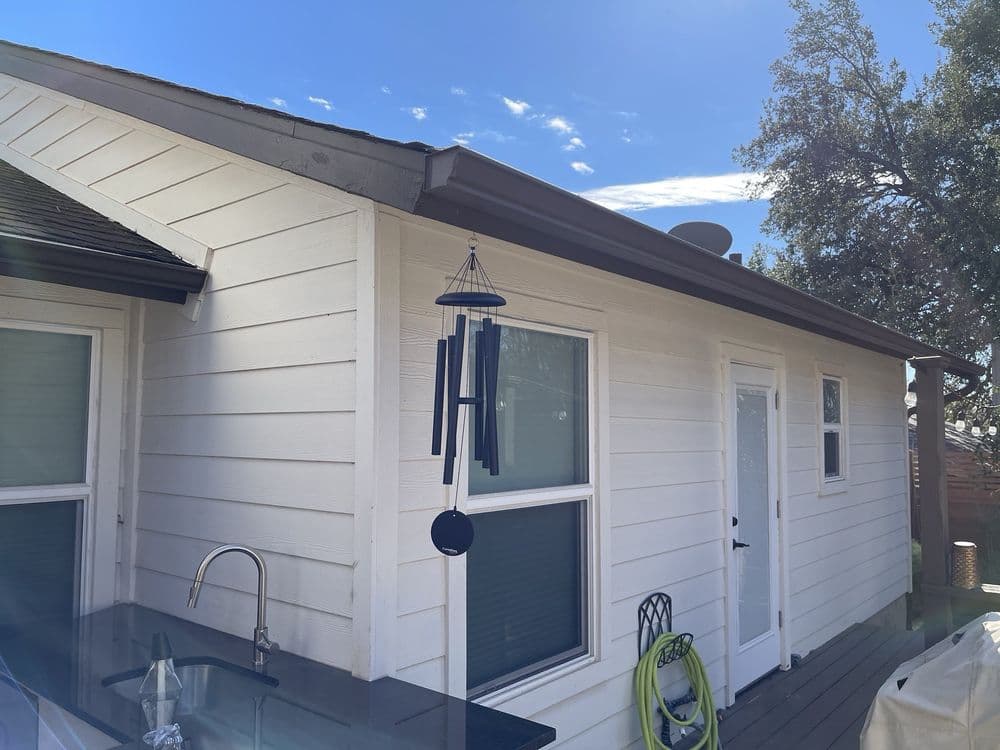
A continuous, clean line running along your roofline looks sharp. There's no other way to put it. The absence of visible seams every ten or twenty feet gives the home a polished, intentional appearance. It's the kind of detail that elevates an exterior from "fine" to "well-maintained," and it registers with everyone from potential buyers to your neighbors.
Dark colors like matte black and charcoal have surged in popularity with contemporary and modern farmhouse designs. Classic bronze and dark brown remain staples for traditional homes. Whatever the style, a color-matched continuous system reinforces the architecture rather than fighting it.
Ready to Upgrade? Here's Your Next Move
Whether you're replacing a failing sectional setup, outfitting a new build, or adding drainage to a home that's never had it, a continuous one-piece system delivers fewer leaks, lower lifetime costs, superior storm performance, and a cleaner appearance than any alternative on the market. It's a decision you make once and benefit from for decades. Jobe Gutter Services has been installing premium seamless aluminum systems across Houston, Austin, Angleton, Lake Jackson, Galveston, and Southeast Texas for over 15 years. Call (512) 290-8871 or (979) 201-1577 to schedule your free on-site estimate and see the difference for yourself.